Demonstrating Real Time AV2 Decoding on Consumer Laptops
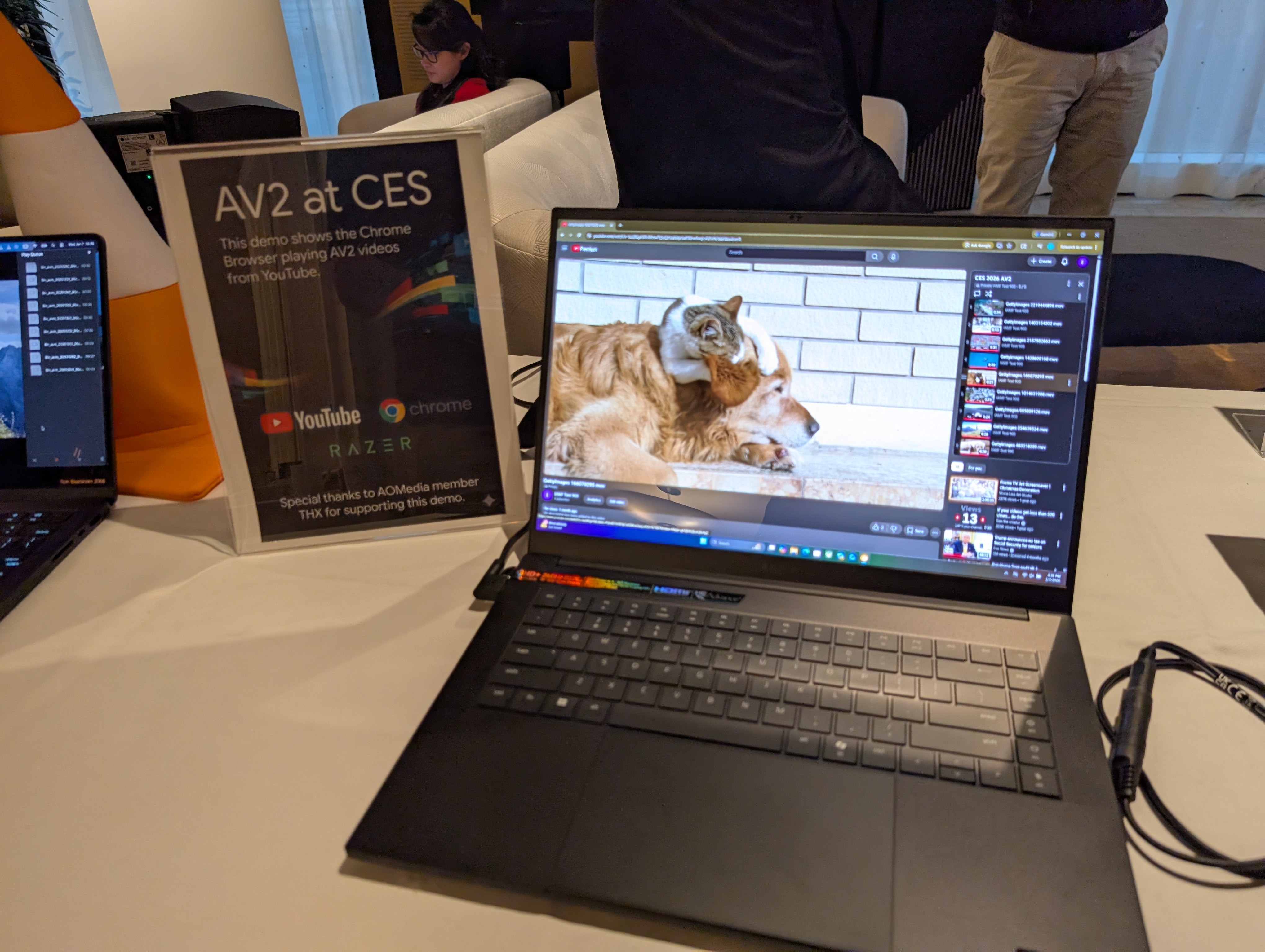
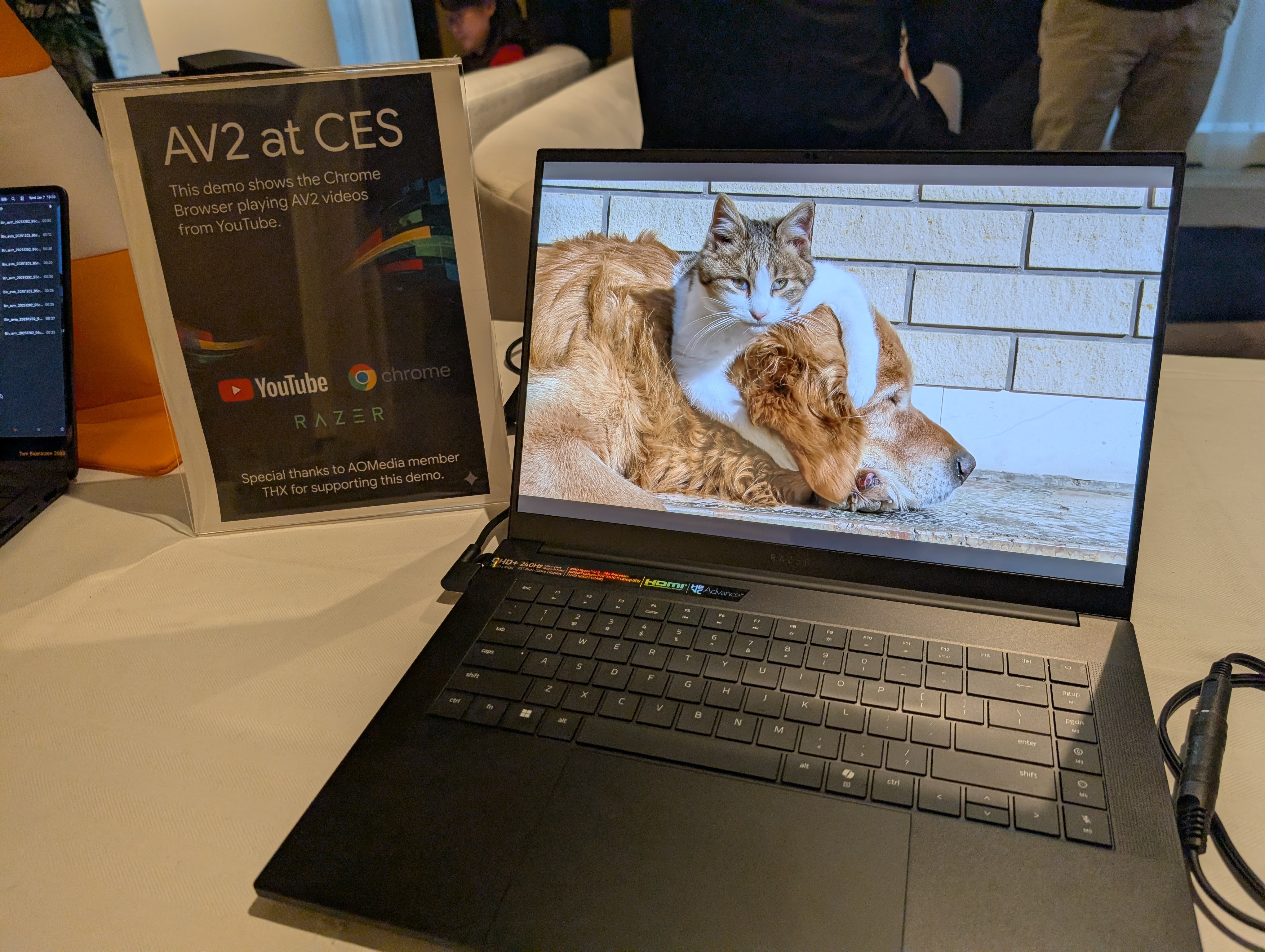
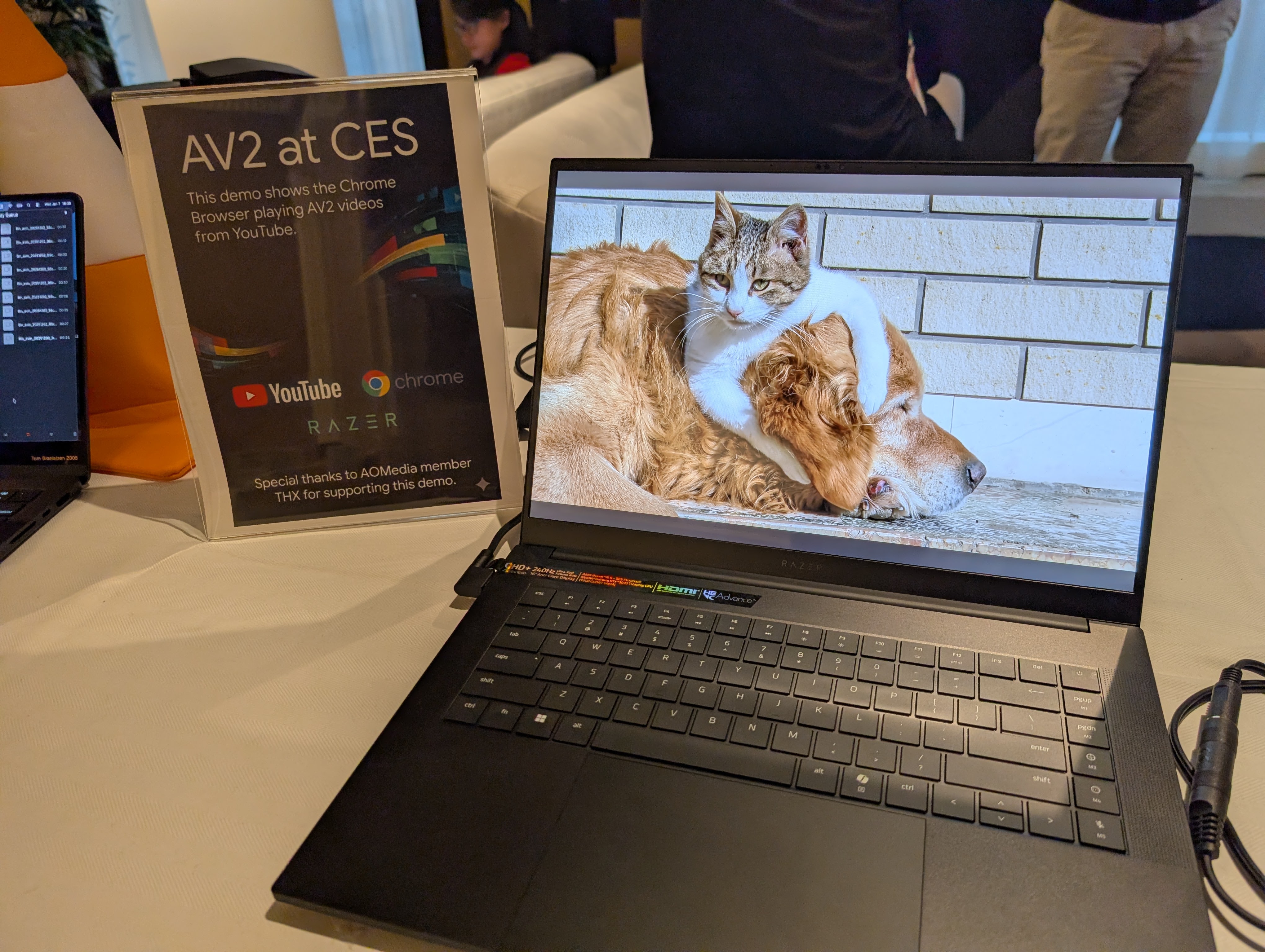
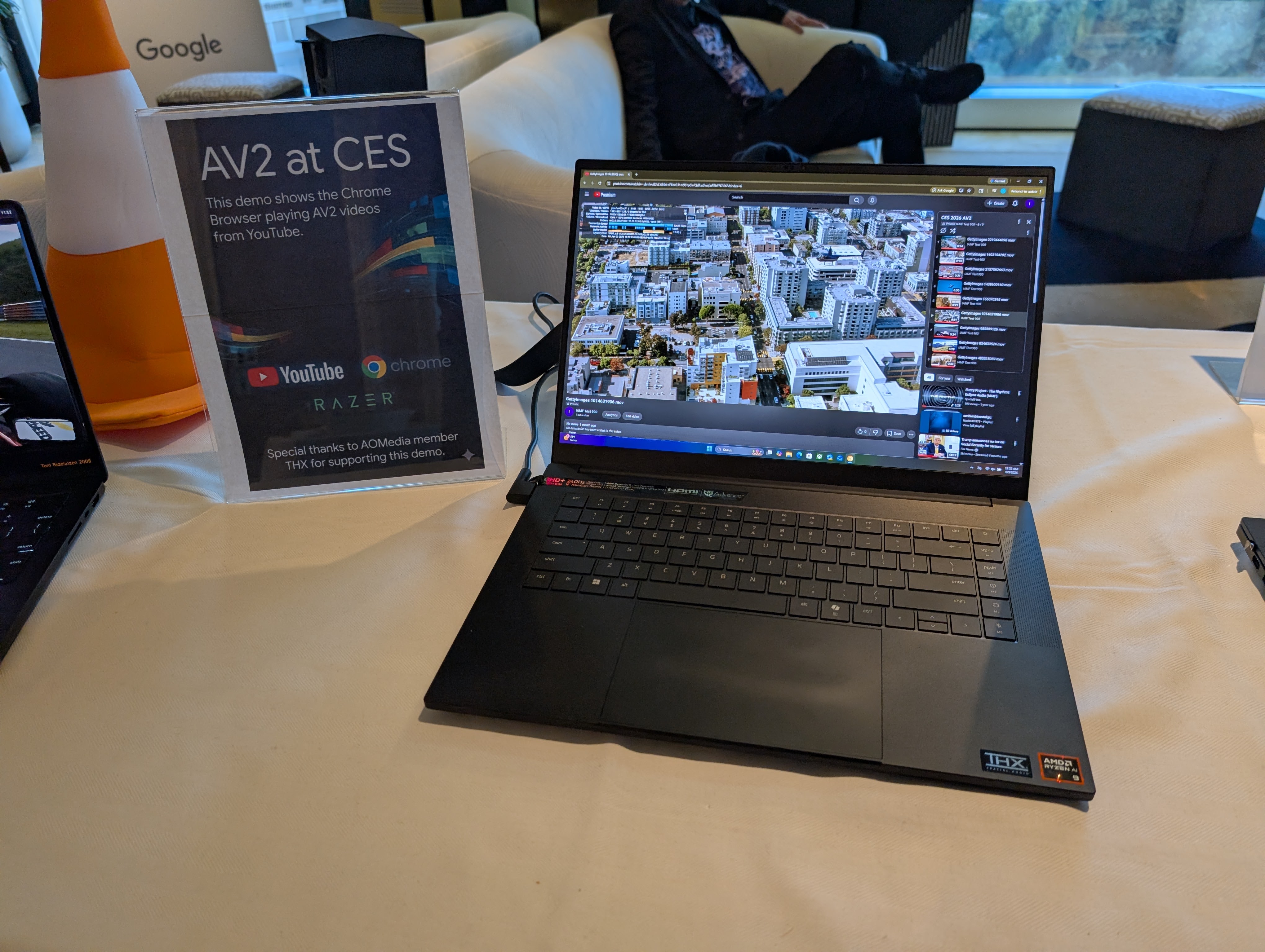
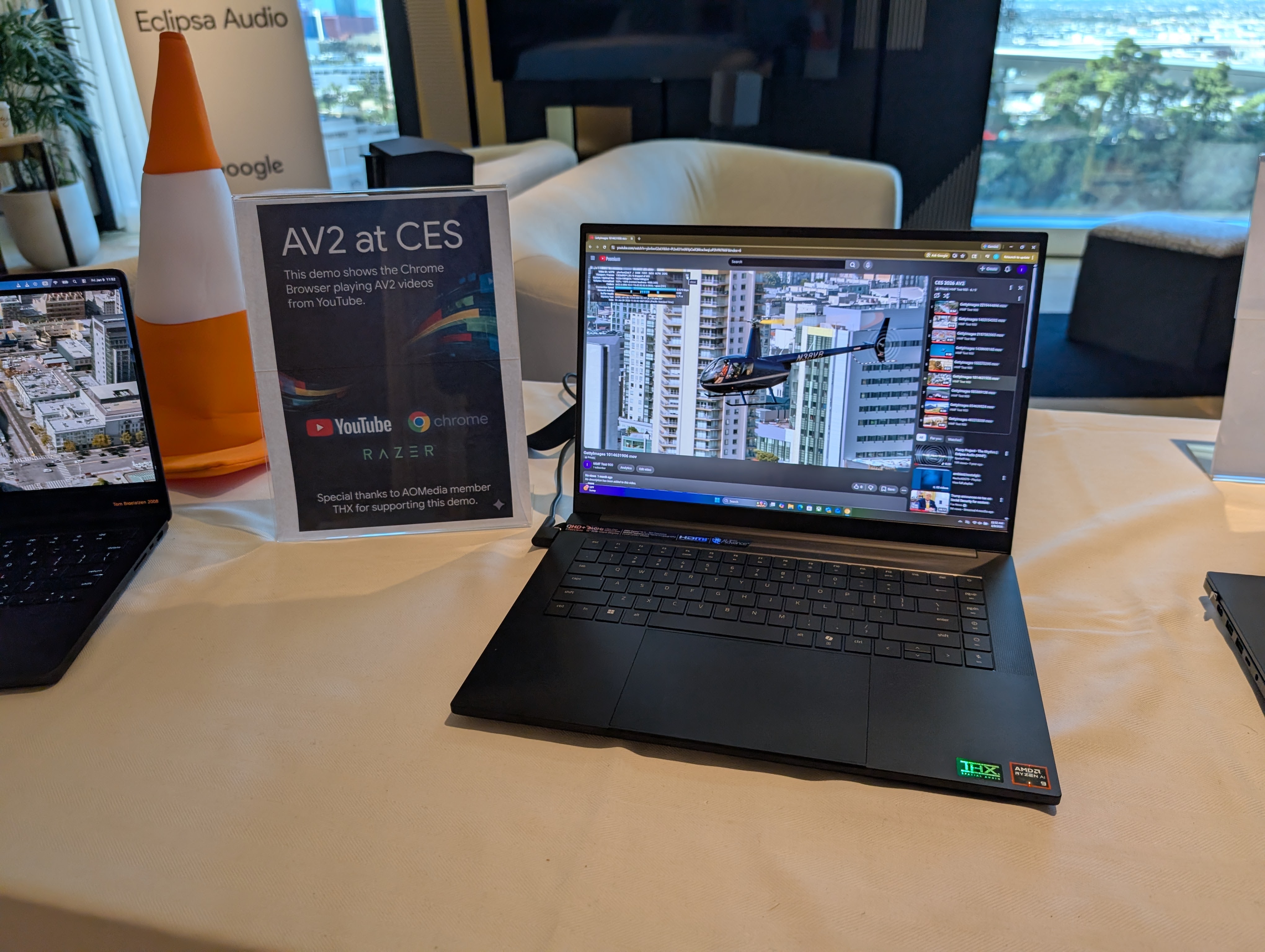
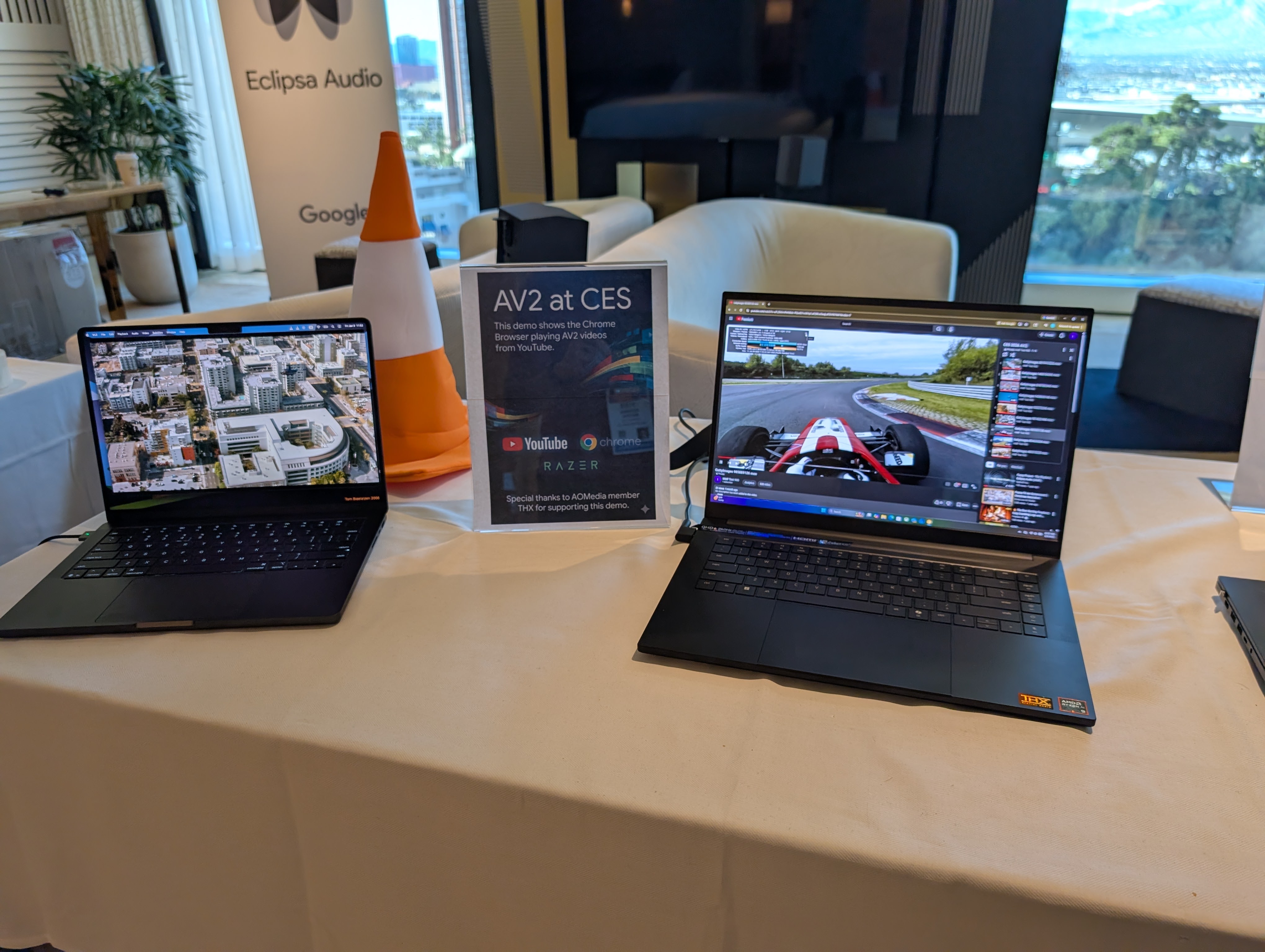
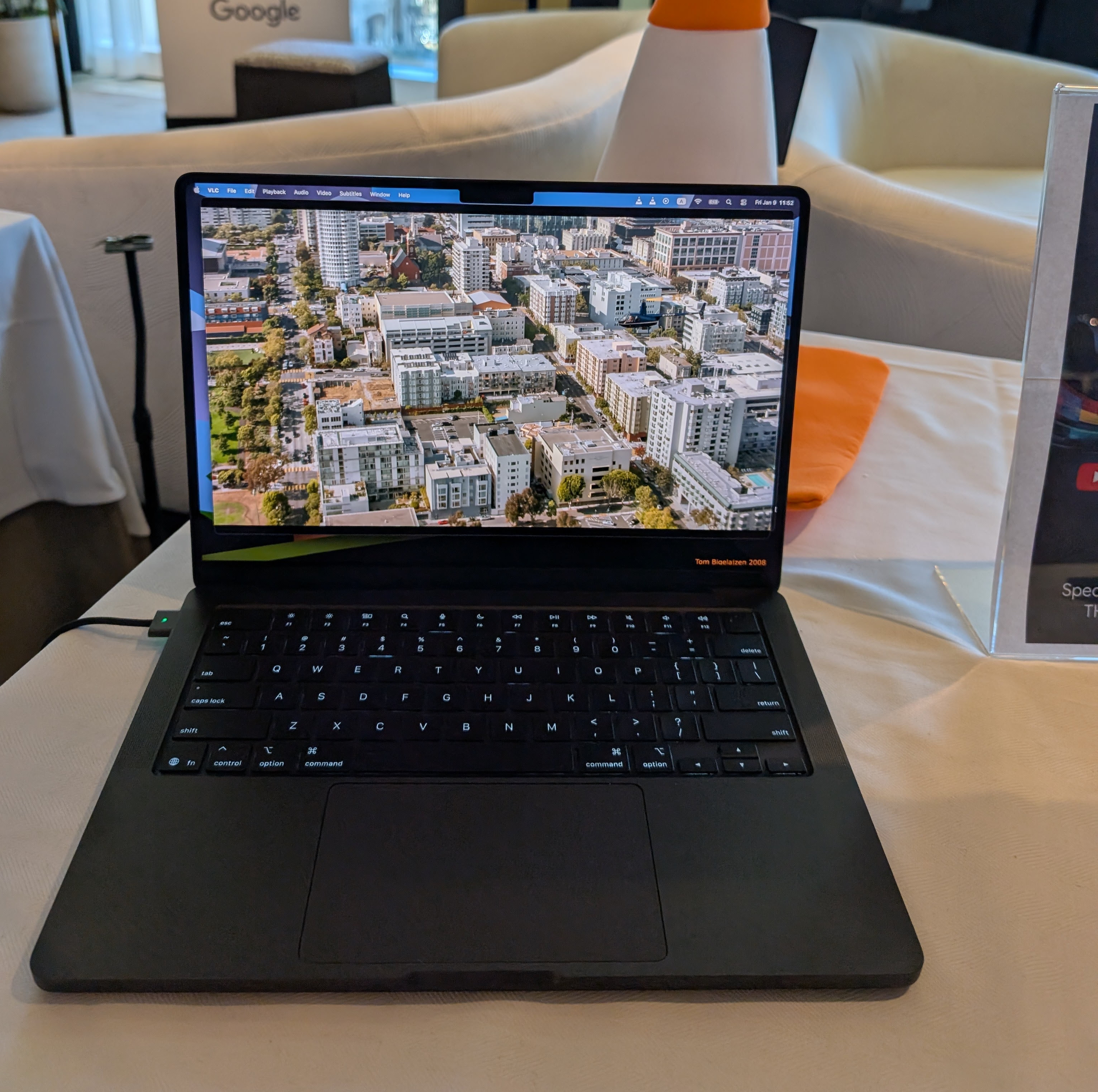
Now that the AV2 specification is publicly available after five years of hard work, AOMedia members are already demonstrating it in real-world playback environments. At CES 2026, AOMedia members Google, and VideoLAN participated in AV2 decoding demonstrations, with support from THX. They showed real-time AV2 playback on laptops using current reference implementations, spanning both native applications and browser-based streaming pipelines.
Together, these efforts showed that AV2 decoding can operate end-to-end in realistic playback scenarios and on widely available laptop-class systems.
Native application decoding with VLC
VideoLAN demonstrated real-time AV2 decoding using VLC 4 running on a macOS laptop. The playback occurred in a native desktop media player rather than in a web browser. The same approach also ran on other platforms, reflecting VLC’s cross-platform design.
The demonstration used a VLC plugin integrating the AVM reference decoder. The plugin was built against the latest AV2 development branch and executed on an ARM-based macOS system.
This work represents the first known demonstration of AV2 decoding in a native desktop media player on laptops. It showed that AV2 decoding can be integrated into an existing media player architecture and run in real time on standard consumer hardware.
Web-based decoding and streaming pipeline
A second demonstration showed AV2 decoding in a browser-based streaming environment. Google demonstrated AV2 playback using Chrome to play AV2 videos streamed from YouTube to a gaming laptop, with real time playback at 1080p and 24 frames per second.
For this demonstration, a set of videos was encoded using a pre-release AV2 bitstream generated with the libavm reference encoder. The content was delivered via an existing streaming platform and played back using a custom browser build that incorporated the libavm reference decoder.
This demonstration exercised a complete encode-to-decode pipeline and showed that AV2 can function within a browser-based playback environment on consumer laptop hardware.
Technical observations
Across both demonstrations, several technical observations emerged:
- AV2 decoding is already functional in real playback environments using reference implementations.
- Real-time decoding was achieved at common resolutions on laptop-class hardware.
- AV2 can be integrated through multiple implementation paths, including native applications and web-based streaming stacks.
The demonstrations focused on feasibility and integration rather than on optimized performance or benchmarking.
Context and next steps
Both demonstrations relied on reference decoders and pre-release AV2 code. The results should not be interpreted as final performance characteristics, but as an indication of current implementation progress.
As AV2 development continues, further work will focus on optimization, additional platform support, and production-grade implementations. AOMedia and its members will continue to share technical updates as AV2 advances toward broader adoption.
Follow AOMedia on LinkedIn to stay up to date on AV2 development, implementation updates, and future technical demonstrations.